Wild at Heart - One Woman Show at Dana Gallery, MT

May 1–28, 2026
Dana Gallery

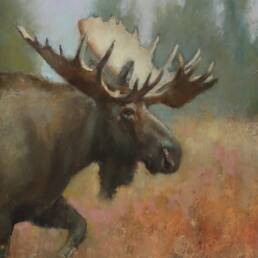
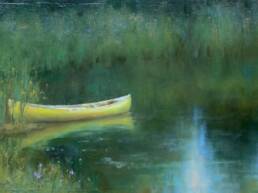
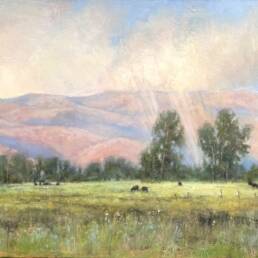
I’m pleased to announce Wild at Heart, my upcoming one-woman exhibition at Dana Gallery, on view May 1–28.

This body of work features my most recent oil and mixed-media paintings inspired by real-life wildlife encounters and time spent in the field. (I'm still busy working on them in my Idaho studios!)

Each painting grows from direct experience, observing animals in their natural habitats and translating those moments into paint through a poetic reverence for nature and the wild.

Please join me for the Artist’s Reception:
🗓 May 1
⏰ 5:00–8:00 PM

Whether painted en plein air or developed later in the studio from my own photographic references, these works reflect a deep connection to place, presence, and the quiet intensity of encounters with wildlife.

I hope to see you at Dana Gallery to experience this new body of work.

📍 Dana Gallery


Nature's Palette Exhibit at Kneeland Gallery

I’m pleased to be part of Nature’s Palette: Animals in Art, a group exhibition at Kneeland Gallery in Sun Valley, Idaho, featuring wildlife artwork.

©2026 Lori McNee, "Golden Thicket" 6x6. oil on panel

My newest wildlife paintings will be on display, all inspired by my travels and real-life encounters in the wild as captured through my camera and field sketches.

Hope to see you at the artists' reception!

Reception: Friday February 13th, 5-7.30pm

Exhibition: January 31st – February 28th


Western Art Week in Great Falls, Montana

Happy to announce that I’ll be returning to Western Art Week in Great Falls, Montana, March 19–21, once again exhibiting with Dana Gallery at the Great Western Show!

©2026 Lori McNee, Beside Sillwaters, 24x48, oil on canvas

Each March, Great Falls becomes a vibrant hub of creativity during Western Art Week, celebrating Western heritage and the legacy of iconic cowboy artist Charles M. Russell, who called Great Falls home. The event draws artists, collectors, and art lovers from around the country.

I’ll be showing a selection of my newest paintings during the week and would love to see you if you’re in town. Hope to see you there!

Contact Dana Gallery in Missoula, Montana, for more information! (406) 721-3154


Small Paintings: Nowhere to Hide

Small paintings have nowhere to hide. What does that mean?

At first glance, small paintings look to be easier to paint than big ones, right? A little 6x6 feels like something you can squeeze in between larger projects. Less surface to cover and fewer brushstrokes should mean less time.

But that’s often the myth.

©2025 Lori McNee, "Frozen Dinner" 6x12, oil on canvas

Wide Open Spaces vs. Tiny Canvases

Big canvases always make me think of that Dixie Chicks song Wide Open Spaces: “wide open spaces, room to make a big mistake.”

That’s exactly what a larger canvas gives you. More room to roam, more room to adjust, and more room to recover when something goes sideways. Shapes can shift. Edges can soften. Whole passages can be redesigned without the painting falling apart.

Small paintings? Not so much. On a small substrate, every mark counts… and there’s nowhere to hide!

A Fox Painting Reminder

I was reminded of this recently while painting a little red fox on a 6x6 panel. I paint foxes often, so it should have been easy. Yet somehow, that tiny painting took 2 full days. Two days! (see painting to the right).

Lori's finished painting, "Golden Thicket" 6x6, oil on panel.

Trying to keep it loose and painterly while still making the fox believable was the real challenge. Even small “fixes” started messing it up, fast!

Eventually, I surrendered. I wiped off the fox and repainted it. And honestly? That reset was exactly what the painting needed. Everything came together quickly, and the painting, "Golden Thicket," found its voice.

The Myth: “Small Means Easy”

A miniature painting isn’t simply a small version of a large one. Instead, small works often require more precision, more restraint, and sometimes a surprising amount of patience.

Why? Because when the canvas is small… everything gets amplified.

Why Small Paintings Can Be Tougher Than Big Ones

On a larger canvas, adjustments happen more naturally. There’s space to shift shapes, soften edges, and let areas breathe.

However, on a small painting, one tiny change can be the difference between “yes!” and “oh no…”

Here’s why:

1) Every Brushstroke Matters

On a 6x6, one brushstroke can become a whole statement. Because of that, corrections can’t be casual. Every mark shows, so each decision matters.

2) Edges Get Loud Fast

One edge that’s too hard can make the subject pop forward too much. On the other hand, too many soft edges can make it disappear completely. So, lost-and-found edges become even more important on small work.

Detail shot of the fox head 🦊 If you look closely, you can still see a faint “ghost line” from an earlier version—his ears were bigger before I wiped him out and started over. It’s more noticeable up close, but I kind of love seeing those little traces of the process.

3) Value Patterns Matter Even More

In small paintings, strong value organization does the heavy lifting. A clear value pattern guides the viewer’s eye. Clear values help create depth and a focal point.

Without strong values, the piece can feel confusing or busy, especially at a smaller scale.

4) Proportions Are Unforgiving

On a small painting, the tiniest shift can throw off the whole piece. For instance, the fox taught me a lesson... every time I “corrected” him, his ears kept getting bigger and bigger!

Starting over gave a clean reset, and the proportions snapped back into place.

5) Overworking Happens Instantly

Small paintings can go from fresh to muddy in minutes. The danger is that “fixing” often becomes the problem!

The Truth: Small Paintings Make You Stronger

As frustrating as tiny paintings can be, there’s a big upside. Small paintings sharpen your skills fast.

They force simplification. They train the eye. They teach better control of edges and values. Plus, they strengthen decision-making. Any hesitation reflects quickly on a small substrate.

The bonus is that small paintings are a safe place to experiment. New ideas can be tested, brushwork can be explored, and risks feel less intimidating than on a 40x30.

©2025 Lori McNee, "Warm Ember" 6x12, oil on panel

A Few Tips to Survive (and Even Enjoy) Tiny Paintings

If small paintings have been giving you trouble, these tips help:

  • Keep shapes larger than you think you need. In other words, avoid getting fussy too soon.

  • Choose one area to stay sharp. Then let everything else diffuse and breathe.

  • Don’t chase detail. Suggest more, describe less.

  • Stop sooner. Fresh is best.

  • Walk away and come back. Fresh eyes solve more than more paint.

  • If unsure, let it dry before “fixing.” Dry paint gives you a safety net.

A Quick Note About Pricing Small Paintings

One question often comes up: “If a small painting takes longer than usual, should I charge more?”

In most cases, the answer is no. Consistent pricing builds trust with collectors and keeps your pricing structure clean and easy to understand. After all, buyers aren’t purchasing your number of hours; they’re investing in the finished piece and the experience it gives them.

Here’s the funny part: pricing works a lot like painting.

On a small painting, every brushstroke shows… and pricing can feel the same way.

On a large piece, raising the price by $100 barely registers because it’s a tiny shift inside a big number. But on a small painting, that same $100 jump feels much louder, and collectors will notice.

That’s why consistent pricing for small work can be a smart strategy. It keeps the “read” clean for collectors and lets the art speak without the price becoming a distraction, like an extra bold brushstroke in the middle of a delicate passage.

The Takeaway

Small paintings may be small… but they are mighty. They can be stubborn, dramatic, and wildly demanding. At the same time, they teach big lessons, and when they finally click into place, they feel like a little gem.

So, if a miniature painting is giving you trouble, stick with it. More often than not, that tiny canvas is simply keeping you honest.

Because the little ones? They really do have nowhere to hide.


Why Professionals Paint in Series

As I prepare for several upcoming exhibitions, including a museum show at the Museum of Western Art in 2028, I’ve been thinking deeply about what it means to create a series of paintings and why professionals paint in series.

This important topic has been close to my heart for many years. In fact, I first wrote about it in 2012 in the popular article titled, 10 Steps to Develop a Series of Exhibition Paintings.

More than a decade later, I still believe that working in a series is one of the most important milestones in an artist’s growth. But my understanding of why has matured.

Why Professionals Paint in Series

After 35 years as a professional artist, I’ve come to see a distinct difference between emerging and seasoned painters. Amateurs often widely explore and experiment with different subjects and styles.

Curiosity is essential to an emerging artist's learning. But at some point, a professional artist begins to focus.

A seasoned artist understands that a cohesive body of work tells a stronger story. A well-developed series feels intentional and connected. It carries a common thread of either color, subject, design, or emotion that makes a gallery wall look curated rather than chaotic. It’s the visual proof that the artist has found their voice and vision.

Finding the Common Thread

Creating a series doesn’t mean painting the same scene over and over; it means exploring an idea deeply enough to discover what ties it all together.

Artist Elizabeth Robbins in front of her impressive series of paintings for the Wild Women Paint the West exhibition at Illume Gallery

For some, that common thread might be a series of floral subjects, rural landscapes, or perhaps a grouping of bird paintings, or a series of encaustic or tonal paintings.

Sometimes it’s a harmonious palette or a mood that unites the work.

Whatever it is, that subtle connection becomes the heartbeat of the collection.

My Current Series: Bridging Wildlife and Landscape

In my most recent exhibition, I revisited my wildlife roots, a beloved subject that has accompanied me throughout my career.

This time, I’ve been weaving these wildlife subjects into broader landscape compositions, bridging the gap between wildlife art and landscape painting.


How to Begin Your Own Series

Artist Romona Younguist in front of her series of gorgeous barn paintings at Illume Gallery

If you’re wondering how to start a cohesive body of work, I’ve shared practical guidance in my earlier article, 10 Steps to Develop a Series of Exhibition Paintings. It remains one of my most-read posts because it helps artists structure their creative ideas into a focused, professional collection.

As you prepare for your next season in the studio, consider choosing one idea, subject matter, emotion, or color harmony to explore.

Let your paintings speak to one another. Over time, that conversation becomes your artistic voice.

After all these years, that’s what I’ve learned: a series isn’t just a collection of paintings—it’s the story of an artist becoming who they truly are.


Wild Women Paint the West in Montana!

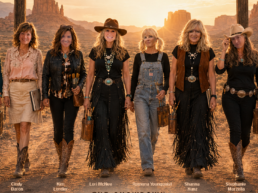
In early September 2025, our group of accomplished artists, known as the Wild Women Paint the West, gathered in the charming town of Philipsburg, Montana, for a very special event with Illume Gallery.


We painted on location, soaking in the rugged beauty and golden light of late summer in Big Sky Country. (Check out my IG Reel below of me painting on location).


View this post on Instagram


A post shared by LORI MCNEE ARTIST (@lorimcneeartist)


The weekend opened on Friday, September 5th, with a warm reception and sale where collectors mingled with the artists while enjoying delicious refreshments. (See IG Reel below)


The following day brought the excitement of a Quick Finish Event as our guests watched while we completed new paintings on the spot, followed by a drawing for purchase of the fresh works at 2:00 pm.

Lori's Quick Draw entry, "Autumn Arbor" 12x12, oil on canvas

The energy, camaraderie, and creativity that filled the gallery that weekend truly embodied the spirit of the Wild Women.

The exhibition continues to hang at Illume Gallery into October 2025, and we invite you to experience the beauty of the West through the eyes of these talented Wild Women:

Elizabeth Robbins · Cindy Baron · Kim Lordier · Lori McNee · Romona Youngquist · Shanna Kunz · Stephanie Marzella · Suzie Baker

If you’re in Montana this fall, make sure to stop by Philipsburg—you won’t want to miss it!

Before wrapping up, I’d love to share a special post by my dear friend and fellow Wild Woman, Kim Fancher Lordier. Her beautiful reflection, “Grit, Grace & Gratitude,” captures the heart and spirit of our Montana adventure — the camaraderie, the challenges, and the joy of painting the West together. 👉 Read Kim’s story here.


PS. Here's a fun day at work in Montana!


View this post on Instagram


A post shared by LORI MCNEE ARTIST (@lorimcneeartist)


How a 19th-Century Cat Painting Led Me to Paint a Bear

Have you ever been inspired by a painting from a bygone era? "Cat in a Summer Meadow," by Bruno Liljefors, is one of those paintings that speaks to me.

"Cat in a Summer Meadow," by Bruno Liljefors circa 1920.

Years ago in the early days of my wildlife painting career (1980s-90s), I deeply admired Liljefors' ability to integrate animals into their natural surroundings with a harmonious, impressionistic approach.

Bruno Liljefors, the Swedish master of wildlife painting, had an incredible ability to integrate animals seamlessly into their natural surroundings. His work captures the quiet intensity of nature—where creatures are both hidden and present, alert yet at ease.

One of his most well-known paintings, "Cat Summer Meadow" recently inspired me to create my own piece. However, instead of a cat, I chose a bear as my subject, adapting Liljefors’ techniques while adding my own artistic voice.

What struck me most about the Cat painting was how effortlessly the cat blended into its environment. It wasn’t just placed in the scene—it belonged there. The soft, atmospheric background, the impressionistic brushwork, and the muted, harmonious palette all contributed to a sense of realism and mystery. I wanted to capture that same essence but with a different animal.

In my painting, I incorporated several of Liljefors’ techniques while making adjustments to fit my own artistic expression:

1. The Animal is Integrated, Not Just Placed

Like Liljefors’ cat, my bear isn’t just standing in a landscape—it emerges from it. Tall grasses and flowers partially obscure its form, creating a sense of unity between the subject and its environment.

©2025 Lori McNee, "Among the Wildflowers," 30x10, oil on canvas

2. Atmospheric Perspective for Depth

The sharpest, darkest details—such as the bear’s face and fur—are in the foreground.
The background softens into a misty blur with cooler colors, adding a sense of distance.
This layering guides the viewer’s eye through the scene, making it feel immersive.

3. A Dynamic Yet Subtle Composition

The bear is positioned slightly off-center, creating movement and flow. Its gaze and body position lead the viewer’s eye through the painting in a way that feels natural rather than static.

4. Lost & Found Edges for Soft Transitions

Rather than rigidly defining the bear’s outline, I allowed its body to dissolve into the grasses, a technique that mimics how we perceive depth in real life. This also enhances the feeling that the bear is part of its surroundings rather than separate from them.

5. A Harmonious, Earthy Color Palette

Muted greens, browns, and soft yellows help create a cohesive natural environment, preventing the painting from feeling too busy or disjointed.

6. A Sense of Stillness & Mystery

Like the cat in Liljefors’ painting, my bear appears calm but alert, as if something unseen is just beyond the frame. This quiet tension invites the viewer to wonder what might happen next.

Final Thoughts

This painting was not only a study in technique, but also a deeper exploration of how animals exist in nature. I study nature in its natural habitat. In fact, each year I travel to Grand Teton National Park to 'hunt' grizzly bears with my CAMERA! I have many photos I use as reference material, but watching these majestic animals in real life has helped me better understand and paint them.

Liljefors’ work reminded me that wildlife art isn’t just about depicting an animal—it’s about capturing a moment, a mood, a presence. Translating that idea from a cat to a bear was both a challenge and a rewarding experience.

For artists looking for inspiration, I highly recommend studying painters like Liljefors. Their ability to balance realism with atmosphere can transform the way we approach our own artwork.


Bringing Birds to Life: A Cobra Oil Painting Workshop with Lori McNee 🕊️

Bringing Birds to Life: A Cobra Oil Painting Workshop with Lori McNee 🕊️

May 8, 2025 – All-Day Workshop
Royal Talens Headquarters, Apeldoorn, Netherlands

I’m truly honored to teach a special workshop at the Royal Talens Experience Centre—the heart of creativity and innovation! As a Royal Talens Ambassador, it’s an incredible privilege to share my passion for Cobra water-mixable oils in such an inspiring setting.

In this immersive, full-day workshop, we’ll focus on easy, approachable steps to create a lifelike bird painting. (Something similar to this image).

Our goal? To craft an evocative piece using Cobra oils alongside mixed media techniques that add depth, texture, and harmony.

🎨 Here’s what we’ll explore together:
🕊️ Realistic Bird Painting: Learn how to bring your subject to life with subtle details and rich color.
🌿 Limited Palette: Discover how just a few tubes of paint can achieve beautiful color harmony.
🖌️ Mixed Media Magic: I’ll share some of my favorite techniques to enhance your painting’s texture and mood.

Whether you’re new to water-mixable oils or looking to expand your skills, you’ll leave with fresh insights and the confidence to create more expressive, lifelike work.

👉 Spaces are limited—reserve your spot today!

🔗 Learn more about my journey as a Royal Talens Ambassador here: Lori McNee – Royal Talens Ambassador


From Underpainting to Life: Mixed Media Fox Demo with Lori McNee 🦊

It's always fun to connect with online friends and followers. Today, I enjoyed joining Creator’s Studio LIVE for an interview and painting demonstration in my new home studio in Idaho.

If you missed the demo you can watch the replay in the YouTube link below!

While working on the underpainting, I shared some of my favorite tips and mixed-media techniques for working with Cobra Artist water-mixable oils, including how to layer them beautifully over an acrylic underpainting.

With only about 30 minutes to paint, I decided to show how I 'start' a wildlife painting and demonstrated some favorite mixed-media techniques. 

Watch as this fox begins to come alive, step by step!

It’s always exciting to see an animal's personality emerge, even in the early stages.

Stay tuned and I'll share the finished painting once it's complete!

BUY LORI'S COBRA PAINTS HERE! 


Artist's Reception with Lori McNee at Dana Gallery

Artist's Reception with Lori McNee at Dana Gallery  in Missoula, Montana

Dana Gallery
Missoula, Montana
Saturday, April 23, 2022
2PM Mountain Time

I've been working in my Idaho studio all fall and winter on a series of nature inspired paintings. This new body of work reflects my love of mountains, wild places and wildlife. I will be posting images in my portfolio soon.

Here's a sneak peek!

©2022 Lori McNee, "Autumn Elk," 24x24, oil on panel
©2022 Lori McNee, "Spring Thaw," 30x40, oil on panel

Stop by Dana Gallery and say hello if you are in the area!