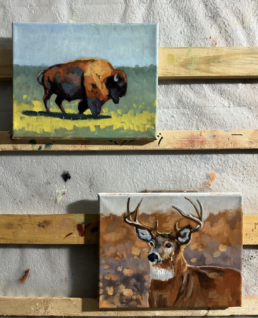


“The devil is in the details,” or at least, that’s what I thought until I did a little research. I discovered it was originally, “God is in the details.”
Here’s how that old saying made it into my painting…
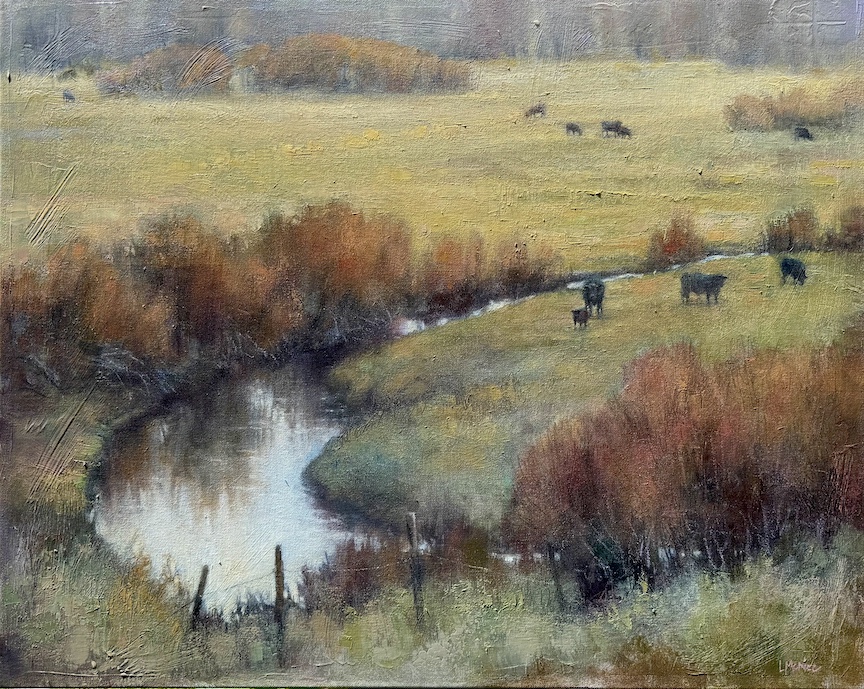
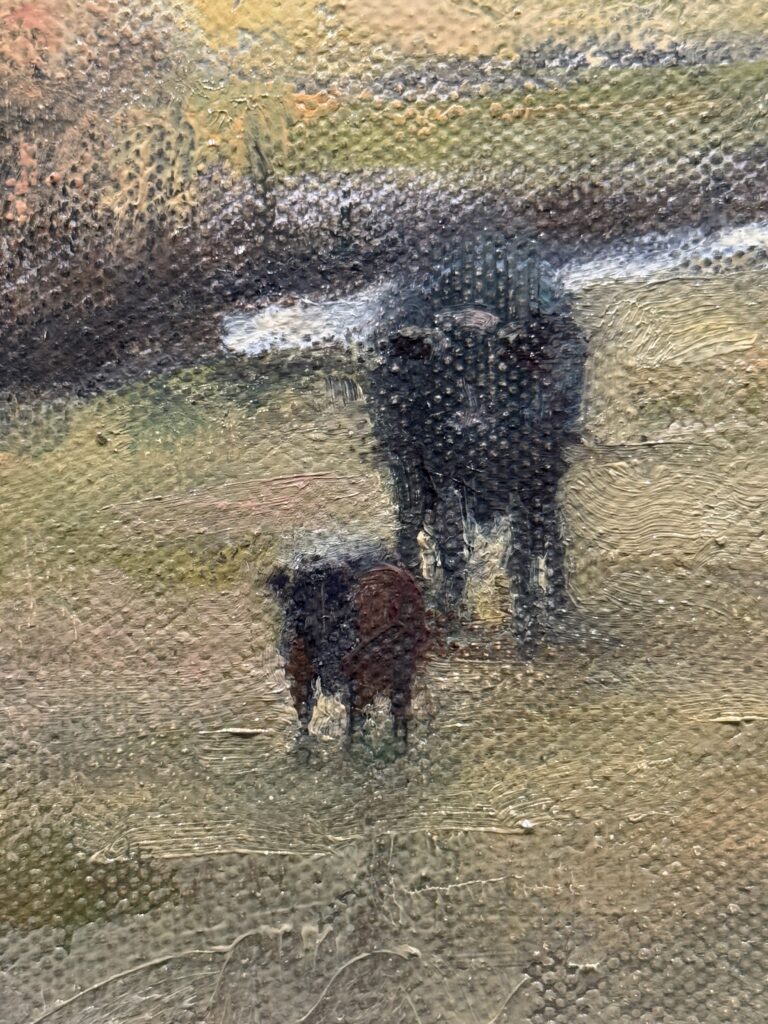
Funny enough, the hardest part of painting Big Lost Bend (24×30) was not the river the willows, or even the atmosphere. It was one little mama cow.
The black cow is only a small part of the painting, but she needed to be clear. Too much detail (overworked) and she would pull the viewer away from the airy landscape. Too little, and she would look like a black ink blob.
As I worked on her, over and over again, my mind wandered between two familiar sayings: “The devil is in the details” and something my mother often said, “The little foxes spoil the vines.”
God—or the Devil—Is in the Details?
Most of us understand what “the devil is in the details” means. That something in life may appear simple at first, but the smallest and most easily overlooked parts are often where problems hide.
I decided to research that phrase, and was surprised to discover an earlier and much more beautiful version of the saying:
“God is in the details.” Aby Warburg
The phrase is closely associated with German art historian Aby Warburg. He used the German version as the motto for a university seminar in 1925. This idea expressed that excellence and deeper understanding are found by paying close attention to the smallest things, the details.
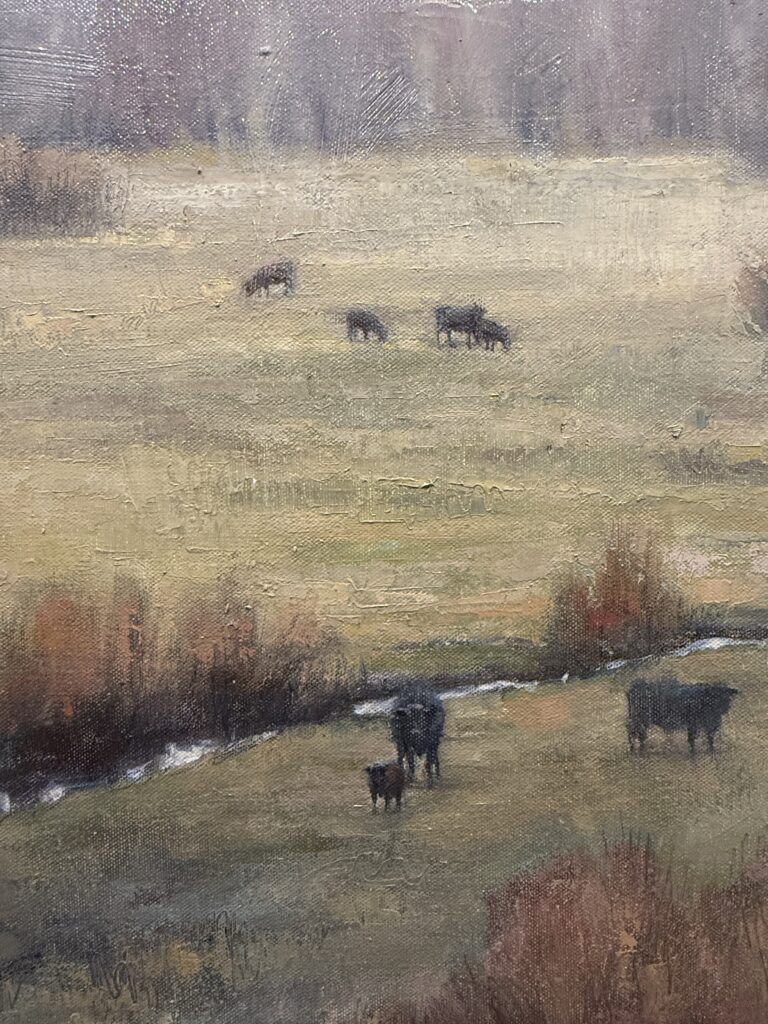
The familiar “devil” version was created later as a clever reversal of God is in the details.
It was a warning about when those details are overlooked, or maybe even overworked!
It wasn’t about replacing God with the devil, but rather to reveal different sides of the same truth.
Details can bring beauty, meaning, and life to something.
The irony is that details can undermine the whole when they are either ignored or pushed too far.
My mother’s pearls of wisdom, “The little foxes spoil the vines,” are from Song of Solomon 2:15.
A gentle reminder that sometimes seemingly small things can damage something larger and beautiful.
Knowing Which Details Matter
In painting, we strive to find this balance.
It means understanding which details matter, how much to say, and when to stop.
Finding this perfect balance has been on my mind a lot lately. In fact, I wrote more about it in my recent post, Painting Nature: You Don’t Need Every Detail.
Perhaps some would say that both God and the devil are in the details. But from now on, I’m choosing to focus on the good, on God. I’ll focus on the beauty and grace found in the smallest things.