

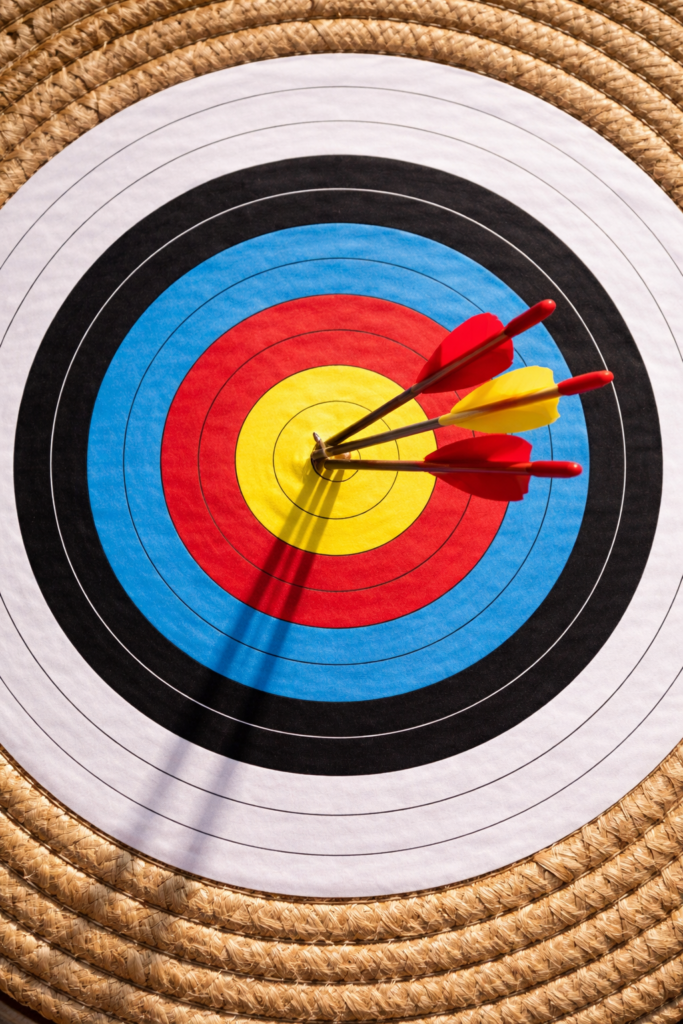
 My wise mother always reminds me, “Scatter your fire, and you miss the mark.”
This shotgun analogy is especially true for artists who need to take calm aim and focus to hit their mark.
Artists are multitalented individuals who sometimes lack the discipline which is needed to achieve their goals.
I’ve worked to find a healthy balance between my painting, blogging, and family life.
The guest article below has some helpful tips on staying focused. ~Lori
 Focus and Plan to Paint!
Guest author/artist: Marie Wise
People often ask me, “How do you manage to get so much done?”
I don’t think I get much more done than the average person. But, after years of pursuing a full-time artist’s career while holding down a full-time job to pay the bills, I’ve honed an important skill every artist can use…
It’s called focus.
Whether I’m at my job, with a dozen projects on deadline, or in my studio at the end of the day, focus is what helps me accomplish my goals.
For artists, focus is important because it defines what we want to do, how we do it, and whether we did it successfully.
I’ve broken focus into three key areas that every artist encounters while completing a work. In my case, it’s a painting.
Let me explain:
- Focus #1: What do I want to paint and why do I want to paint it?
Paintings are born in my mind long before touching the canvas. The process involves creative discernment:
- Why is the subject appealing?
- What is the color or symbolic message involved?
- What does it mean to me?
- What do I want the painting to say?
I carry the creative-spark period with me wherever I go; while I’m at work, while I’m on my walk, or in the shower, even when I’m sleeping.
The thinking process inevitably leads me to why I want to paint that subject. Then when I’m ready to paint, I know what I’m doing (and why)! I think this is especially important to artists who have to be away from their studios for other jobs. It clarifies the reason for putting forth all the effort that a painting inevitably requires.
- Focus #2: How am I going to paint it?
Since I already know what I want to paint and why, the ‘how am I going to paint it’ part has been solved. This is because the subject often defines the technique. But, I still need to break down a few areas:
Resources: Depending on what I’m painting, I might need models, props, a still life setup, or photography. Do I have everything I need?
Medium: What am I painting on: canvas, panel, paper? What size? Gessoing canvas or stretching watercolor paper entails drying time. The best use of my drying time is to sketch and prepare compositions.
Technique: Am I painting in a classical Old Masters style, or loose and impressionistic? The subject often defines the technique. Figures often need underpainting layers (Verdaccio or Grisaille), but florals are often created with direct painting. Knowing how I’m going to apply the paint is best decided beforehand.
Sketch/Transfer/Paint: Getting the composition onto the medium (canvas or paper) and starting to paint is always the best part. I feel like I’ve accomplished so much.
Now it’s just a matter of giving my idea life through paint! I step back often, analyze how it looks, get a cup of tea, and let the painting sink into my subconscious. I take my time to feel good about what I’m doing and enjoy the process.
- Focus #3: Did I successfully paint it, and would I paint it again?
The painting is finally finished. I need to get some distance to evaluate it. I’ll step away for a while, then look at it again, which always gives me a fresh outlook.
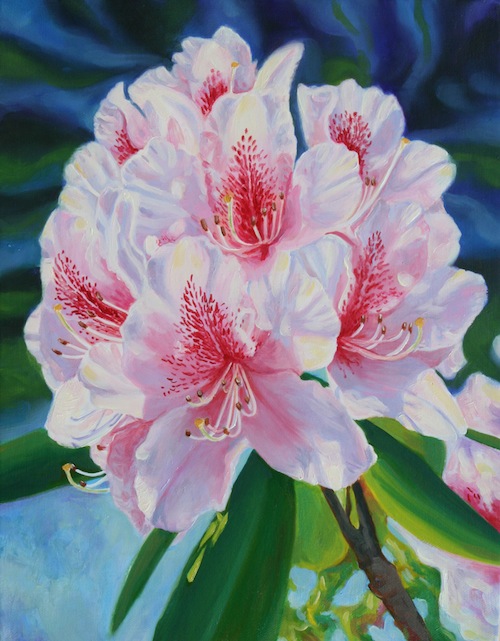
Questions to ask include:
- Was I successful in what I originally set out to do? Did the technique match the subject?
- Did I learn anything?
- Would I paint this subject again?
- If I can say yes, then the process was all worth it. If I can’t say yes, what went wrong?
To grow as an artist, I need to know what I did well (so I can do it again), and what I need to learn (so I can get better).
When you think about it, focus is really a careful process of planning. So many people think artists conjure artworks from some magical talent that other people don’t have. That’s not true.
Successful artists, like musicians, dancers, and writers, practice, practice, practice, spending time, thought, effort, and energy. They have regular schedules for the things they must accomplish. As artists, we owe it to ourselves to make what precious time we have available for our art as valuable as possible.
*****
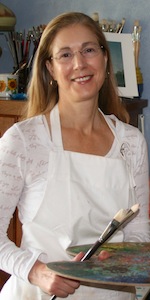
Thank you to Marie for sharing these insightful and useful suggestions to help her fellow fine artists keep their focus!
< Marie Wise is an artist and public relations professional from Southwest Washington State. She works by day in public relations, and spends her evenings and weekends painting in her home studio overlooking the scenic Columbia River.
If you enjoyed this article, you might like to read:
Boost Art Productivity with Short Studio Sessions
My Week with Master Landscape Artist, Michael Workman
The Healthy Artist: Tips to Help You Stay that Way
*****
Need some more inspiration? Check out Lori’s Suggested Reading!
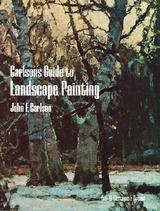 Carlson’s Guide to Landscape Painting
This is an indispensable book and a must-have for any serious landscape painter. The whys and hows of the various aspects of landscape painting.