

Most artists pack up their gear and head indoors when the temperatures drop. But, I do the opposite! Winter plein air painting is important because it informs and inspires my studio work.
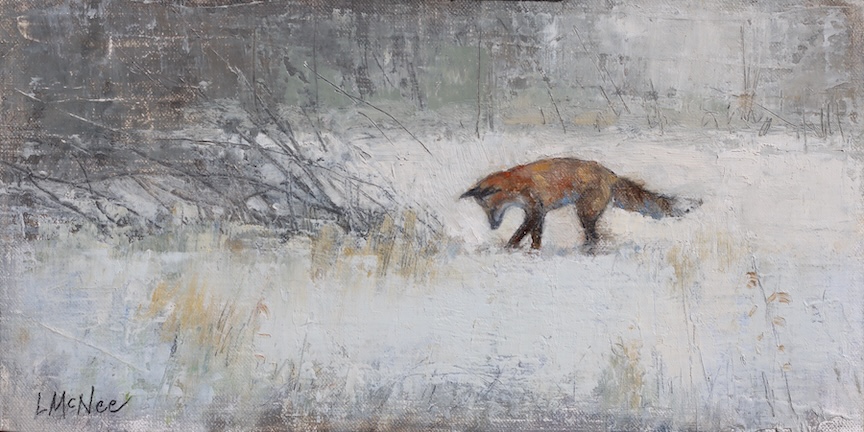
There’s a quiet beauty to winter that many people overlook. The magical grays, the muted colors, and the crisp light, it’s a season full of subtle nuances. Winter invites adventurous painters to slow down, observe, yet demands we work quickly before the chill sets in!
Winter plein air painting is challenging!
Over the years, I’ve painted around the world from the Arctic stillness of Norway to the wilds of South Africa, from the mists of Scotland to Alaska, the snow-capped Italian Alps, and beyond. I’ve experienced every kind of weather, and while rain might be the most inconvenient, and summer bugs the most annoying, snow and freezing temperatures present the biggest challenge and the most reward.
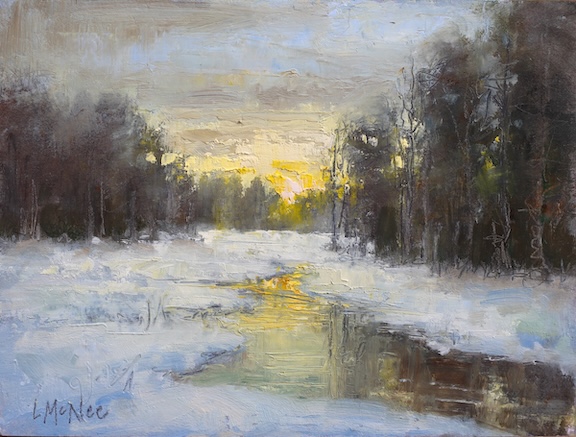
My Cold-Weather Secrets for Winter Plein Air Painting
Dress Smart and Layer-Up
This is the most important tip! Staying warm is essential to ward off hyperthermia or frostbite. The right kind of clothing can make the difference between a good and a miserable time.
Stay away from cotton, which traps moisture and dries very slowly. Stick with moisture-wicking layers like Morino wool or thermal base layers underneath insulated outerwear. Down is great for keeping warm, but not good in wet weather like rain or snow. Try a heated vest, Gore-Tex, and insulated outerwear to keep you toasty. Wear gloves designed for dexterity (like those for photographers or fishermen), so you can still grip brushes.
Pro tip: Stand on something! I use an old carpet square or an insulated car mat to keep my feet warm from the cold, the snow, or frozen ground.
And yes, hand warmers are a must. Toss some in your gloves and pockets.
Find the Sun!
In summer, find the shade, but in winter, find the sun!!
Use the sun strategically. Standing in the sun helps keep you warm, but if sunlight is hitting both your back and your canvas, the sunshine can trick your eyes. The glare may cause you to paint values too darkly, since your eyes adjust to the brightness.
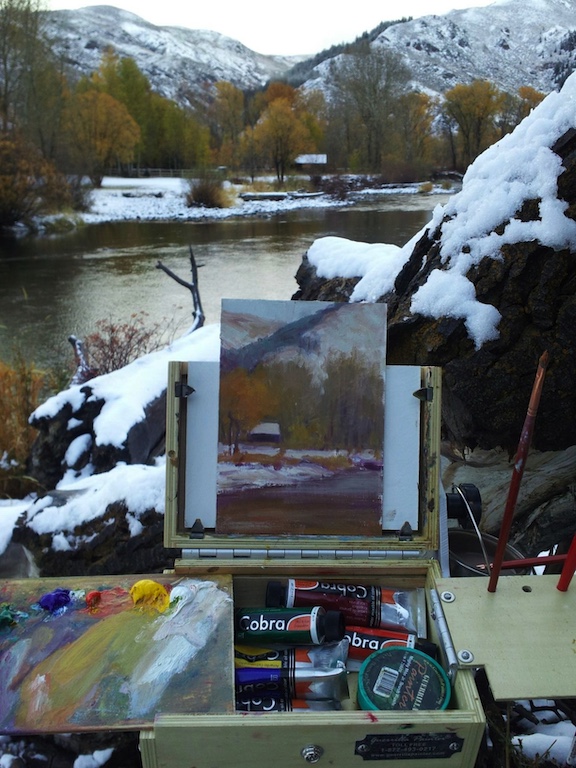
To avoid this, try to keep your canvas in shade, or at a 45-degree angle from the sun, while hopefully standing in the sun.
Angling your easel up and down, or using a small umbrella or a brimmed hat, can help.
And when the snow is bright, sunglasses are a lifesaver. They give your eyes a break, reduce strain, and help you judge values more accurately throughout the session.
Travel Light, Paint Small
Winter plein air painting is not the time for big canvases or too many tools.
Bring only the essentials: a few brushes, a small panel (5×7-9×12), and use a limited palette.
The Zorn palette of only white, yellow ochre, vermilion, and black is fantastic for winter scenes.
Lay out your paints before you head out, so you’re ready to go when it’s time to paint. Simplicity keeps you fast and nimble.
 If You Use Water-Mixable Oils, Read This
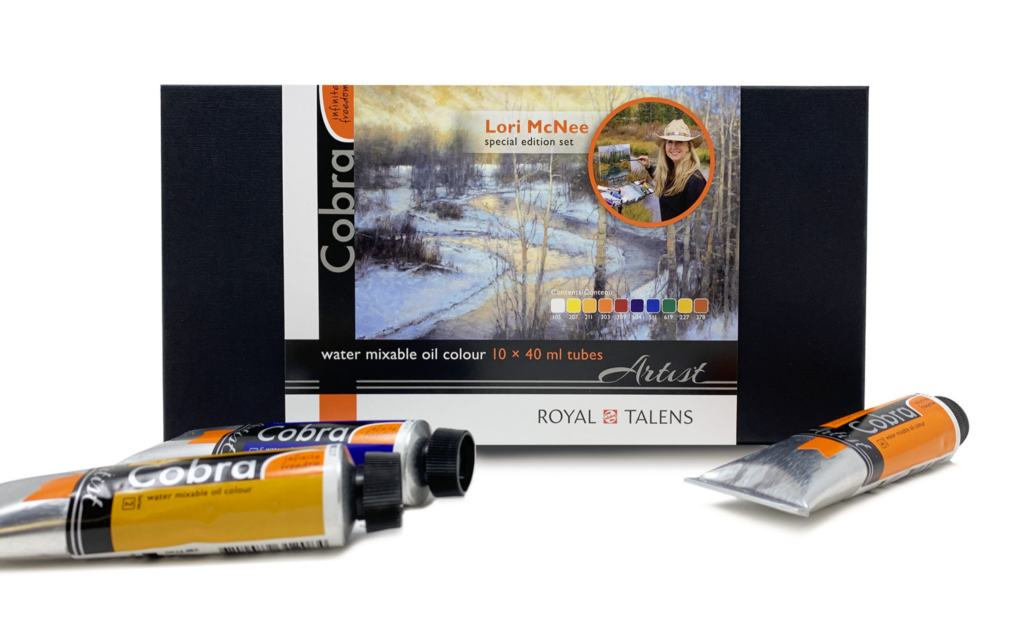
I paint with water-mixable oils, but here’s a critical tip: do not use water when temperatures drop below freezing.
Instead, switch to fast-drying mediums like Quick Dry Medium options, specifically made for water-mixable formulas.
Some artists try alcohol to keep paint moving, but manufacturers strongly advise against it, and so do I.
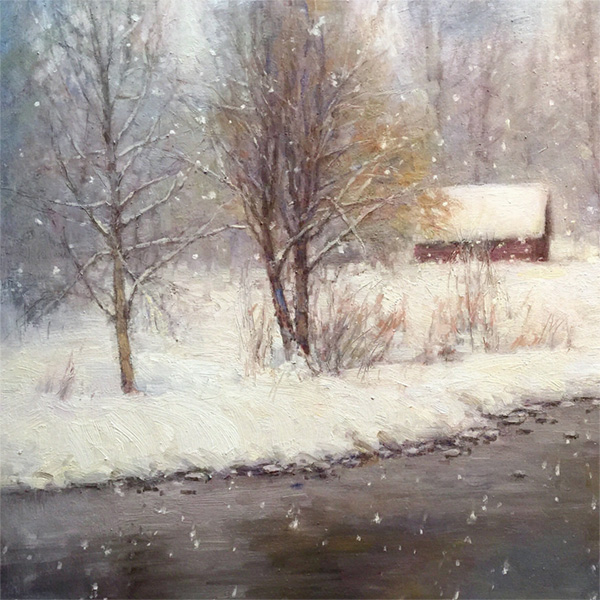
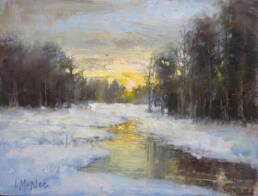
“Snowy Day,” 20×20, oil on panel, was inspired by a plein air painting outing years ago.
Stay Close, Paint Fast
Work near your car or another warm shelter. That way, you can take breaks to warm up or regroup.
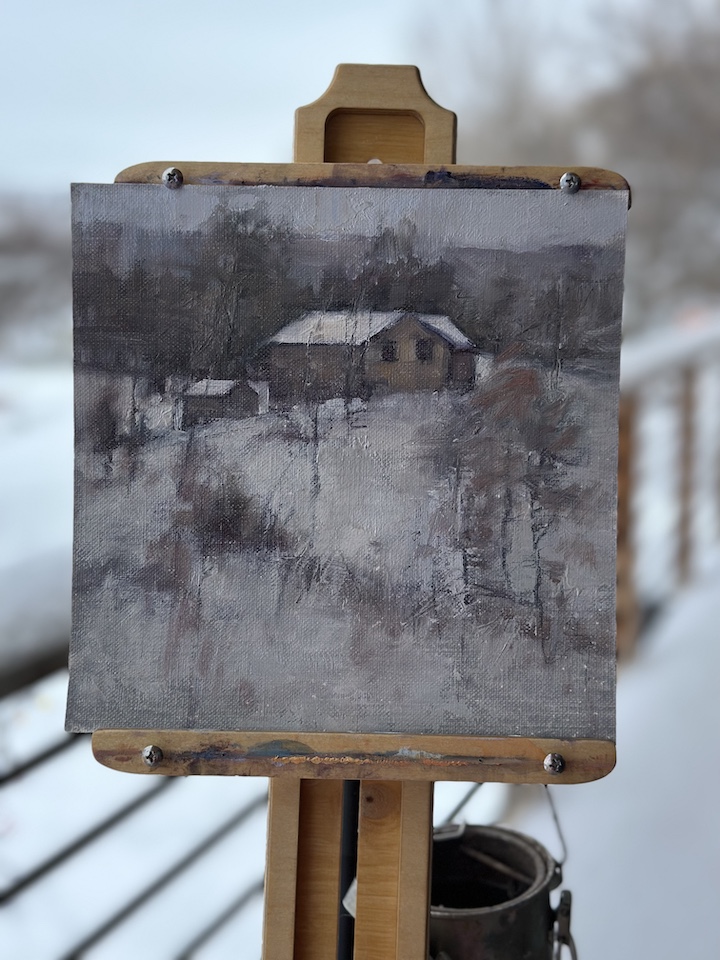
Keep compositions simple and small. You’re not aiming for a gallery piece, but you’re there to capture the atmosphere, emotion, and a memory.
If you’re heading out to a remote area, bring a painting buddy. If you are in snow country, check the weather conditions before heading outside.
Safety always comes first.
Let the Landscape Teach You
What may seem like a world of white is actually full of color: purples, blues, pinks, and even greens. Winter scenes challenge you to see the nuances with fresh eyes.
Winter light is soft and low, the edges are gentle, and the sky can change dramatically in minutes.
Painting in winter trains your eye for subtlety.
Pack Comforts (They Matter)
Don’t underestimate the power of small luxuries. A thermos of hot coffee or cocoa makes everything better. So do foot warmers, extra socks, and that trail mix, or a little bar of chocolate you forgot you packed.
A snow shovel, tow strap, and a tin can with a candle are always in my winter-weather safety kit!
Plein Air Painting is a Physical Discipline
Honestly, winter plein air painting is more like a sport! You’re in active gear, braving the elements, and making quick decisions under pressure. But that’s part of the reward.
There’s a special satisfaction in creating something beautiful in challenging conditions. Winter plein air painting builds skills, confidence, and deepens your connection with nature.
Final Thoughts: Find the Quiet Magic
If you’ve never tried winter plein air painting, I encourage you to give it a try, even if just once.
Start small and keep it simple. Let go of perfection and experience the moment.
You might find, like I did, that winter has something special to offer: a deeper connection with your surroundings and yourself.